If you have been told to watch your blood pressure, chances are someone mentioned the DASH diet. DASH stands for Dietary Approaches to Stop Hypertension, and it is one of the most researched eating patterns in the world. This beginner DASH diet meal plan explains what to eat, what to limit, and what a full sample week looks like, so you can start this week.
Unlike fad diets, DASH was designed by researchers, not marketers. It focuses on fruits, vegetables, whole grains, lean protein and low fat dairy, while cutting back on sodium, added sugar and saturated fat. Studies have shown it can lower blood pressure in as little as two weeks, and many people also lose weight on it because the foods are naturally filling and lower in calories.
A quick note before we start: if you have high blood pressure, take blood pressure medication, or have a kidney condition, talk with your doctor or a registered dietitian before making big changes to your diet or sodium intake.
What Is the DASH Diet?
The DASH diet is an eating plan originally developed to help lower blood pressure without medication. Instead of banning foods, it sets daily and weekly serving goals for each food group. You eat more of the foods that support healthy blood pressure, like potassium-rich fruits and vegetables, and less of the foods linked to higher blood pressure, like salty processed foods.
There are two versions. The standard DASH diet allows up to 2,300 mg of sodium a day, while the lower sodium version allows up to 1,500 mg a day. Most beginners start with the standard version and work down as their taste buds adjust.
You do not need special foods, supplements or meal delivery. Everything on the DASH diet comes from a regular grocery store, which is part of why it consistently ranks among the top diets recommended by doctors.
What to Eat on the DASH Diet: Daily Serving Goals
Serving goals below are based on a 2,000 calorie diet, the most common DASH target. Eat a little less overall if you are aiming for weight loss.
Grains: 6 to 8 servings a day
Choose whole grains most of the time. One serving is one slice of whole wheat bread, half a cup of cooked brown rice or oatmeal, or half a cup of whole wheat pasta. Oats at breakfast and brown rice at dinner cover most of the day easily.
Vegetables: 4 to 5 servings a day
One serving is one cup of raw leafy greens or half a cup of cooked vegetables. Broccoli, spinach, carrots, tomatoes, sweet potatoes and peppers are all great choices. Frozen vegetables without added sauces count too and are just as nutritious.
Fruits: 4 to 5 servings a day
One serving is one medium fruit, half a cup of fresh or frozen fruit, or 4 ounces of 100 percent juice. Bananas, oranges, berries, apples and melon are DASH staples because they are rich in potassium, which helps balance sodium.
Low fat dairy: 2 to 3 servings a day
One serving is one cup of low fat milk or yogurt, or 1.5 ounces of low fat cheese. Dairy is a key DASH food group because it provides calcium and protein. If you avoid dairy, choose unsweetened fortified alternatives.
Lean meat, poultry and fish: 6 ounces or less a day
That is about two small palm sized portions. Bake, grill or broil instead of frying, and trim visible fat. Fish like salmon and tuna earn bonus points for heart healthy omega 3 fats.
Nuts, seeds and legumes: 4 to 5 servings a week
One serving is a third of a cup of nuts, two tablespoons of seeds, or half a cup of cooked beans. Choose unsalted versions to keep sodium down. A handful of almonds or a bean based lunch a few times a week covers this.
Fats and oils: 2 to 3 servings a day
One serving is one teaspoon of olive oil or soft margarine. Use olive oil for cooking and dressings, and keep an eye on hidden fats in pastries and fried foods.
Foods to Limit on the DASH Diet
- Sodium: stay under 2,300 mg a day (1,500 mg for the lower sodium version). The biggest sources are bread, soup, deli meat, pizza, cheese and restaurant meals.
- Added sugar: no more than 5 servings a week of sweets, counting one tablespoon of sugar or jam as a serving.
- Saturated fat: choose lean meats and low fat dairy, and go easy on butter, fatty cuts and full fat cheese.
- Alcohol: if you drink, keep it moderate, and check with your doctor since alcohol can raise blood pressure.
A Sample Day on the DASH Diet
Here is what a full 2,000 calorie DASH day looks like in practice.
Breakfast: Oatmeal made with low fat milk, topped with sliced banana and a tablespoon of chopped walnuts.
Morning snack: An apple with a low fat string cheese.
Lunch: Turkey and vegetable wrap in a whole wheat tortilla with lettuce, tomato and mustard, plus a side salad with olive oil and lemon.
Afternoon snack: Baby carrots with two tablespoons of hummus.
Dinner: Baked salmon with half a cup of brown rice and a cup of steamed broccoli.
Evening snack: A cup of low fat yogurt with berries.
This day hits the fruit, vegetable, whole grain and dairy targets without any special cooking skills. For more morning ideas, see our healthy breakfast ideas for weight loss, most of which fit DASH with small tweaks.

7-Day DASH Diet Meal Plan for Beginners
Use the sample day above as your template and rotate through these ideas for a full week. Each day targets about 2,000 calories and stays near 2,000 mg of sodium. If weight loss is your goal, trim portions slightly or pair this with our 1500 calorie meal plan.
Day 1
Breakfast: Whole grain toast with peanut butter and banana slices, plus a glass of low fat milk.
Lunch: Lentil soup with a side salad and a whole wheat roll.
Dinner: Grilled chicken breast, quinoa and roasted carrots.
Snacks: Orange and a small handful of unsalted almonds.
Day 2
Breakfast: Low fat Greek yogurt with berries and a sprinkle of oats.
Lunch: Black bean and corn salad with avocado over brown rice.
Dinner: Baked cod with sweet potato and steamed green beans.
Snacks: Pear and baby carrots with hummus.
Day 3
Breakfast: Veggie omelet with spinach, mushrooms and tomato, plus whole wheat toast.
Lunch: Tuna salad on whole grain crackers with celery sticks.
Dinner: Turkey chili with kidney beans, served over a small portion of brown rice.
Snacks: Apple slices and a low fat cheese stick.
Day 4
Breakfast: Smoothie with low fat milk, frozen berries, banana and spinach.
Lunch: Leftover turkey chili with a side salad.
Dinner: Stir fried tofu with mixed vegetables and whole wheat noodles.
Snacks: A small bunch of grapes and unsalted sunflower seeds.
Day 5
Breakfast: Oatmeal with diced apple, cinnamon and walnuts.
Lunch: Grilled chicken salad with chickpeas, cucumber and olive oil dressing.
Dinner: Baked salmon with farro and roasted Brussels sprouts.
Snacks: Banana and a cup of low fat yogurt.
Day 6
Breakfast: Whole wheat pancakes topped with fresh berries (skip the syrup or use a light drizzle).
Lunch: Vegetable and white bean soup with a whole wheat roll.
Dinner: Lean beef stir fry with peppers, broccoli and brown rice.
Snacks: Orange and a handful of unsalted pistachios.
Day 7
Breakfast: Low fat cottage cheese with pineapple and a slice of whole wheat toast.
Lunch: Mediterranean style wrap with hummus, grilled vegetables and feta.
Dinner: Herb baked chicken with roasted sweet potato and a large side salad.
Snacks: Mixed berries and a few whole grain crackers.
Low Sodium Tips That Actually Work
Cutting sodium is the hardest part of DASH for most beginners, because salt hides in foods you would not expect. These habits make the biggest difference.
- Cook more at home. Restaurant and packaged meals are the top sodium sources. Even simple home cooking cuts sodium dramatically.
- Read the bread and soup labels. A single bowl of canned soup can hold half a day of sodium. Choose low sodium or no salt added versions.
- Flavor with herbs, not salt. Garlic, lemon, black pepper, cumin and fresh herbs add plenty of taste.
- Rinse canned beans. Rinsing removes up to 40 percent of the sodium.
- Go gradual. Cut back over two to three weeks. Your taste buds adjust, and food starts tasting fine with less salt.
Grocery List for Your First DASH Week
One shopping trip covers the whole plan. Our weight loss grocery list is a handy printable companion.
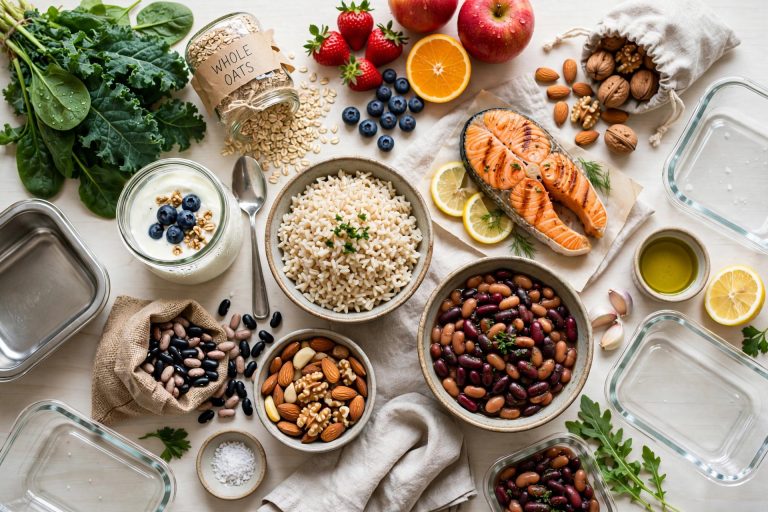
- Produce: bananas, apples, oranges, berries, melon, pears, grapes, pineapple, spinach, broccoli, carrots, tomatoes, peppers, cucumbers, sweet potatoes, green beans, onions, garlic, lemons, avocado
- Grains: oats, brown rice, quinoa, farro, whole wheat bread, tortillas, rolls, crackers, whole wheat pasta
- Protein: chicken breast, turkey, lean beef, salmon, cod, tuna (low sodium canned), eggs, tofu
- Legumes: lentils, black beans, kidney beans, chickpeas, white beans
- Dairy: low fat milk, low fat Greek yogurt, low fat cottage cheese, low fat cheese
- Pantry: olive oil, unsalted nuts and seeds, peanut butter, hummus, low sodium canned tomatoes, herbs and spices
Frequently Asked Questions
Can I lose weight on the DASH diet?
Yes. Although DASH was designed for blood pressure, its focus on fruits, vegetables, whole grains and lean protein naturally keeps calories moderate. Many people lose weight on DASH, especially when they also watch portions. If weight loss is your main goal, see our beginner healthy meal plan guide for a lower calorie starting point.
How much sodium is allowed on the DASH diet?
The standard DASH diet allows up to 2,300 mg of sodium per day, and the lower sodium version allows up to 1,500 mg. Most Americans eat far more than that, so even moving toward the standard target is a big improvement.
What foods should I avoid on the DASH diet?
DASH does not ban foods, but it limits salty processed foods, sugary drinks and sweets, fatty meats and full fat dairy. Read labels on bread, soup, deli meat and cheese, which are the sneakiest sodium sources.
Is the DASH diet good for beginners?
Yes, it is one of the easiest plans to start because nothing is off limits and every food comes from a regular grocery store. Start by adding one extra serving of vegetables and fruit to each meal, then work on sodium over a few weeks.
How quickly does the DASH diet lower blood pressure?
Studies show blood pressure can drop within two weeks on DASH, with bigger improvements over a few months. Results vary, so keep taking any prescribed medication and follow your doctor’s advice.
Start simple: add the fruits, vegetables and whole grains this week, and trim sodium a little at a time. The DASH diet works because it is built on normal food and steady habits, not willpower.